
What are the different types of dental X-rays?
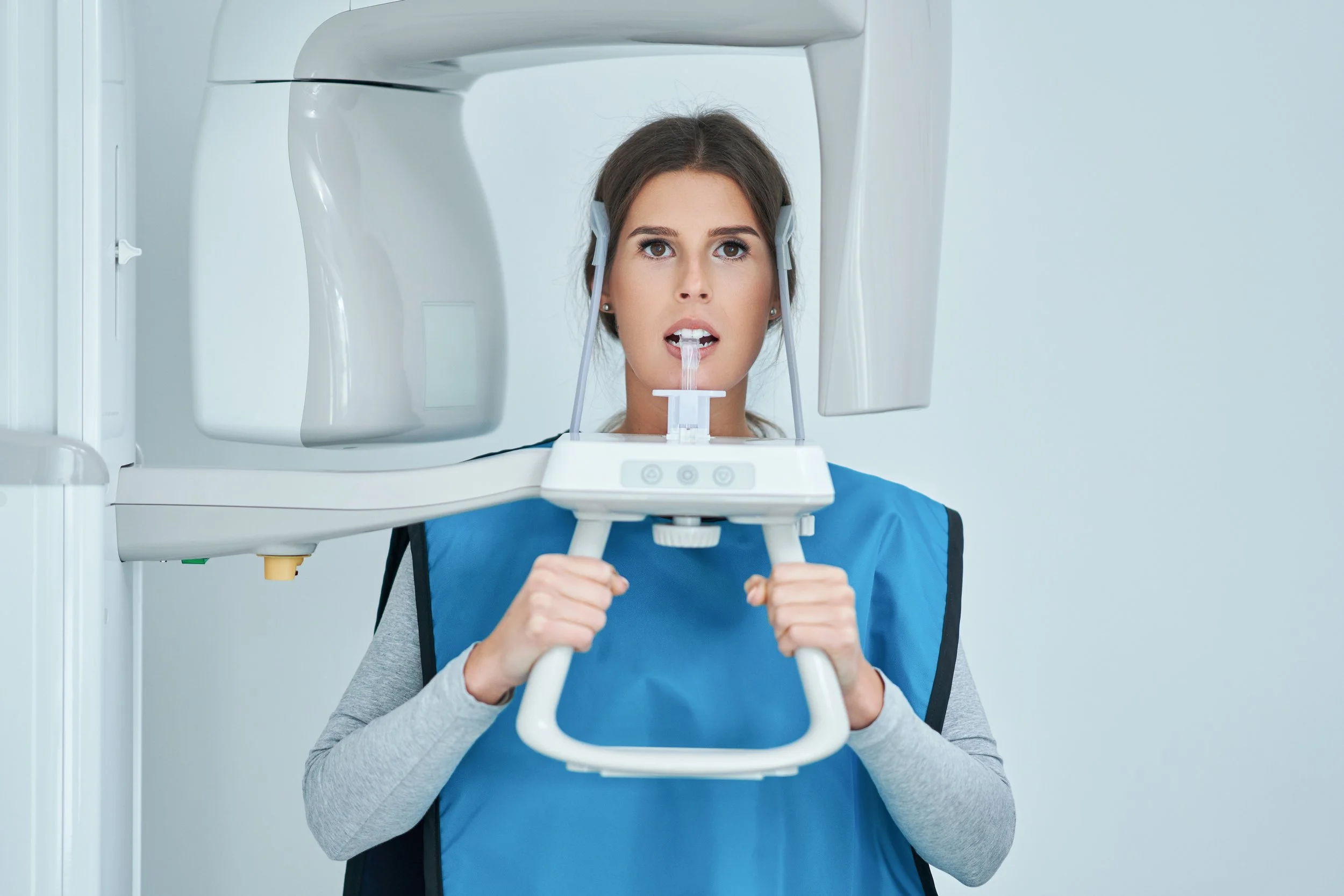
Dental X-rays are an important diagnostic tool that allows dentists to see areas of the teeth, jaw, and surrounding structures that cannot be seen during a regular oral examination. Dental X-rays can be divided into two main categories: intraoral and extraoral.
Intraoral X-rays are taken with a sensor placed inside the mouth, while extraoral X-rays capture images from outside the mouth and provide a larger view of the teeth, jaw, and facial structures.
Intraoral X-rays
Intraoral X-rays provide detailed images of individual teeth and the surrounding bone. Common types include:
Bitewing: Bitewing X-rays capture the crowns of the upper and lower teeth and are commonly used to detect cavities between teeth. They can also help dentists evaluate the supporting bone levels around the teeth.
Periapical: Periapical X-rays show an entire tooth, from the crown to the root, along with the surrounding bone. They can help dentists identify infections, abscesses, and changes around the root.
Occlusal: Occlusal X-rays provide a larger view of the upper or lower jaw. They may be used to evaluate developing teeth, impacted teeth, and certain abnormalities, particularly in children.
Extraoral X-rays
Extraoral X-rays provide a broader view of the jaw, teeth, and facial structures. Common types include:
Panoramic: A panoramic X-ray uses a machine that rotates around the patient's head to capture a broad image of the entire mouth and jaw. It may be used to evaluate wisdom teeth, impacted teeth, jaw abnormalities, and for planning certain dental treatments.
Cephalometric: Cephalometric X-rays capture a side-profile image of the head and jaw. They are commonly used in orthodontic treatment planning to evaluate jaw relationships, facial growth, and tooth alignment.
Cone Beam CT: Cone beam computed tomography (CBCT) uses X-rays to create detailed 3D images of the teeth, jaw, bones, nerves, and surrounding structures. It may be used for implant planning, complex oral surgery, impacted teeth, and other situations that require detailed 3D imaging.
Get Updated Dental X-Rays
At Hale Family Dentistry, we use dental X-rays as part of comprehensive dental care when appropriate. Call our office today to schedule an appointment and learn more about how dental X-rays can help your dentist evaluate your oral health.